Article
In this sample of incidents we’ve reviewed here at Realz, the cases span only a few days, a handful of countries, and several very different contexts. That matters. This is not a complete picture of everything happening in visual deception right now.
But even in this small set of reported cases, one pattern stands out: the image is rarely the whole story. The more important question is what the image was supposed to make someone believe, share, approve, fear, or overlook.
Across the incidents reviewed here, AI-generated and manipulated visuals were reportedly used to support political messaging, spread false claims, pursue a small fraud claim, create non-consensual sexual content, and circulate misleading social media posts. In one case, a fake image reportedly supported a rideshare damage dispute. In another, law enforcement warned that a synthetic image falsely suggested an elementary school incident that never happened. In others, public figures were depicted in synthetic scenes and those images spread through highly visible accounts.
That is a useful reminder that visual-authenticity problems are not confined to one category. They can show up in public discourse, platform moderation, customer-support workflows, and personal abuse all at once.
A narrow but revealing cross-section
The incidents in this review fall into a few distinct groups.
1. Synthetic political and public-figure imagery
Several cases involved public figures being shown in scenes that were reportedly fabricated or highly likely to be AI-generated.
A fact-check from India concluded that a viral image purporting to show Tamil Nadu Chief Minister Joseph Vijay celebrating an election win with his wife and children was AI-generated. The reporting cited reverse-image-search failures, a lack of credible corroborating coverage, visible inconsistencies in the image, and detector results from WasitAI and Hive Moderation.
In the U.S., multiple reports said Donald Trump posted AI-generated imagery on his verified Truth Social account, including images of himself with an alien and another showing a dramatic military-themed “calm before the storm” scene. One report also described a later image depicting Trump arresting an alien. In these cases, the reporting centered less on a hidden impersonation attempt and more on the significance of synthetic imagery being posted from a highly visible political account during a tense geopolitical moment.
These incidents are not identical, and the evidence around motives and intent remains incomplete. Still, taken narrowly, they show two related risks: synthetic visuals can be used to manufacture apparently personal or documentary moments, and they can also blur the line between performance, propaganda, and factual communication when posted from influential accounts.
2. Fake images used as proof
One of the clearest cases in this sample involved an alleged attempt to use an AI-generated image as evidence in a routine transaction.
ABC News reported that a Florida Lyft driver was accused of submitting a synthetic image to support a $75 damage claim against a teenage rider and her friend. According to the report, the rider’s father requested proof, received a photo of the alleged mess, and the rider noticed an AI logo in the corner. Lyft later apologized, reimbursed the charge, and removed the driver from the platform.
This incident is modest in scale compared with national political misinformation, but it may be more operationally useful as a warning. It shows how easy it may be for synthetic visuals to enter ordinary customer-service or claims workflows if the process assumes that a photo is inherently persuasive.
That matters because many business processes still treat images as lightweight evidence. If an image can trigger a charge, support a complaint, or shape a dispute outcome, then image authenticity becomes a workflow issue, not just a media-literacy issue.
3. False alerts and public confusion
The Ohio school rumor case shows a different kind of harm.
According to local reporting, the Stark County Sheriff’s Office warned that an AI-generated image circulating on social media falsely claimed deputies had been dispatched to Middlebranch Elementary School to investigate a device. The sheriff’s office said the image was fake and that no such incident had occurred.
This appears to be a straightforward example of a synthetic image being used to create false situational awareness. The image reportedly mimicked the look of app-based incident reporting, which is important: deceptive visuals do not need to be photorealistic portraits to be effective. A fabricated screenshot or interface-style image can be enough if it fits what viewers expect to see.
In practical terms, this kind of incident can consume institutional attention, trigger unnecessary anxiety, and complicate communications with parents, staff, and the public.
4. Non-consensual synthetic imagery at scale
One of the most serious incidents in this set involved alleged non-consensual deepfake pornography.
The New York Post reported that federal authorities arrested two individuals accused of posting thousands of deepfake pornographic images and videos depicting celebrities, politicians, classmates, friends, and other real people without their consent. The report said prosecutors charged the defendants under the TAKE IT DOWN Act and alleged that the material had been viewed millions of times.
Because this reporting describes allegations and charges, not adjudicated findings, caution is warranted. Even so, the reported scale and victim count make the underlying point hard to ignore: synthetic imagery is not only a misinformation problem. It is also a harassment, exploitation, and dignity problem.
This case also widens the usual conversation. Public discussion of deepfakes often focuses on politics or election misinformation. In the incidents reviewed here, one of the clearest harms is personal abuse using a real person’s likeness without permission.
5. The trust spillover problem
The Malaysia wildlife case is useful because it shows harm beyond direct impersonation or fraud.
AFP reporting described a viral image claiming to show an orangutan cuddling a clouded leopard, which a conservation group said was biologically impossible. The report said an AI detection tool found a 99.6 percent probability that the image likely contained fabricated content, and experts explained why the depicted interaction was inconsistent with animal behavior.
What makes this case notable is the secondary effect described in the reporting: concern that AI-generated wildlife imagery could erode trust and make genuine conservation work harder.
That is an important, narrower lesson from this sample. Synthetic images do not have to trick a payment system or impersonate a politician to cause damage. They can also degrade confidence in legitimate evidence, documentation, and public-interest communication.
What this sample does and does not suggest
It would be too much to claim a sweeping global trend from eight incidents over a few days. The sample is too small, and the geographies and use cases are too mixed for that.
What this small set of reported cases does support is a more specific observation: image deception is showing up across very different trust environments.
In the incidents we’ve looked at here at Realz, fake or allegedly fake visuals were used to:
- support a fraud or disputed claim
- create or amplify political messaging
- mislead social audiences with false event imagery
- exploit real people’s likenesses in sexual content
- undermine confidence in documentary or scientific imagery
That range matters because it pushes against an overly narrow view of deepfakes as just an election issue or just a social-media moderation issue. In this sample, the same broad problem category touches public communications, platform governance, abuse prevention, customer operations, and evidence handling.
Why verification matters more than visual intuition
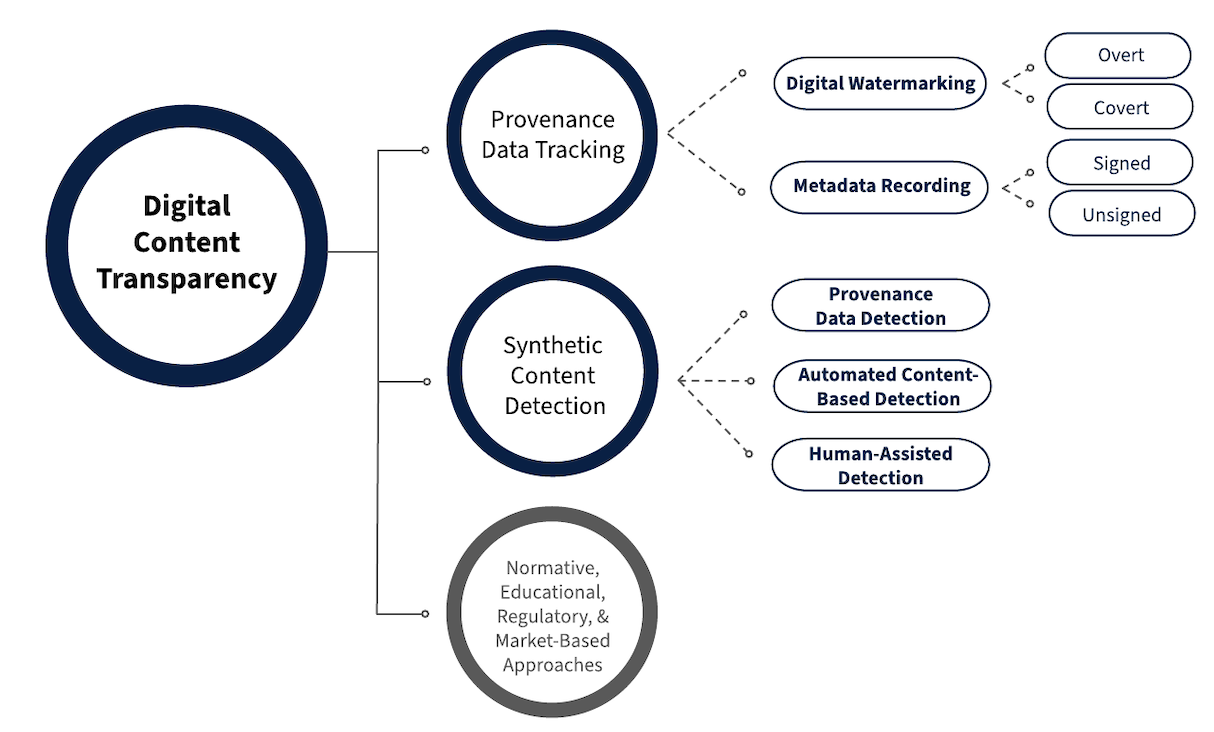
The reporting in these incidents repeatedly relied on a mix of signals rather than a single tell. Fact-checkers used reverse image search, source checks, contextual inconsistency, expert review, and detector tools. In the Lyft case, the watermark-like AI logo was an obvious clue, but that should be understood as a lucky break, not a durable control.
That distinction matters. Background guidance from NIST and other institutional sources supports a cautious point here: detection tools can help, but they are not final proof on their own, and human judgment is not consistently reliable either. A better approach is layered verification.
In plain terms, when an image is driving an important decision, useful questions include:
- Where did this image come from?
- Is there a credible original source?
- Does the surrounding claim hold up independently of the image?
- Are there corroborating records, posts, witnesses, or official statements?
- Is the image being used as evidence, or just as emotional persuasion?
Those are not advanced forensic techniques. They are basic governance habits. But in a visual environment shaped by cheap generation and rapid sharing, those habits become more important.
 Source: NIST AI 100-4, Fig. 2, 2024. Adapted with attribution.
The bigger lesson: the image is part of a process
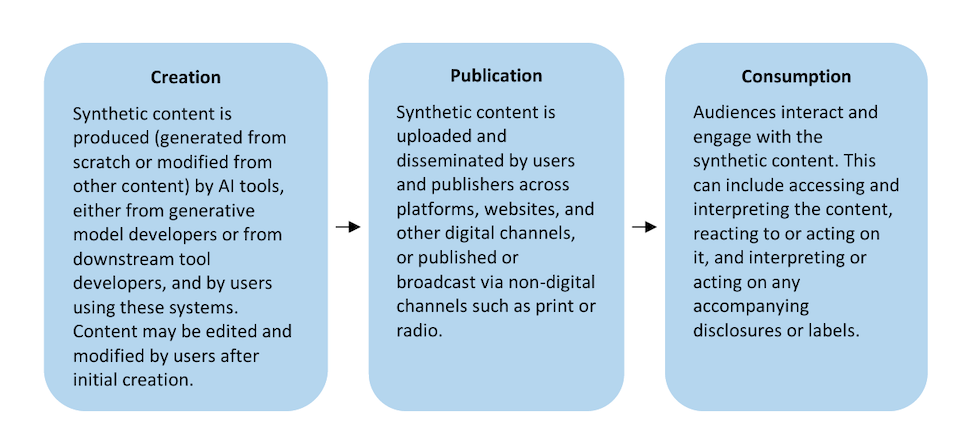
The strongest common thread across these incidents is not technical sophistication. It is process vulnerability.
A fake family celebration image can shape political perception. A fabricated screenshot can create panic around a school. A synthetic mess photo can influence a claims process. A fake wildlife image can distort public understanding. Non-consensual deepfake pornography weaponizes visual plausibility against real people.
In each case, the image matters because some audience is being asked to accept it as enough.
That is why the most useful response is not simply “get better at spotting AI.” In many settings, that is unrealistic. The more durable response is to design workflows, moderation practices, and communications habits that do not let a single unverified image carry too much weight.
A practical takeaway for institutions
This sample of incidents supports a restrained but clear takeaway.
Organizations, platforms, public agencies, and media teams should treat suspicious visuals as a verification and response issue, especially when the image could trigger payment, panic, enforcement attention, reputational harm, or public confusion. The central question is not whether every image can be perfectly authenticated. It is whether important decisions depend too heavily on unverified visual evidence.
That is a narrower claim than saying every team needs a deepfake program overnight. But it is well supported by the cases here.
In a media environment where fake images can be political theater one minute and customer-service evidence the next, visual trust is no longer a niche concern. It is becoming part of ordinary operational judgment.
And in the incidents reviewed here, that may be the clearest pattern of all: the real target was not the eye. It was the decision behind it.
 Source: NIST AI 100-4, Fig. 1, 2024. Adapted with attribution.